

“Eat more fruits and vegetables.”
“Choose lean protein.”
“Eat a balanced diet.”
“Reduce processed foods.”
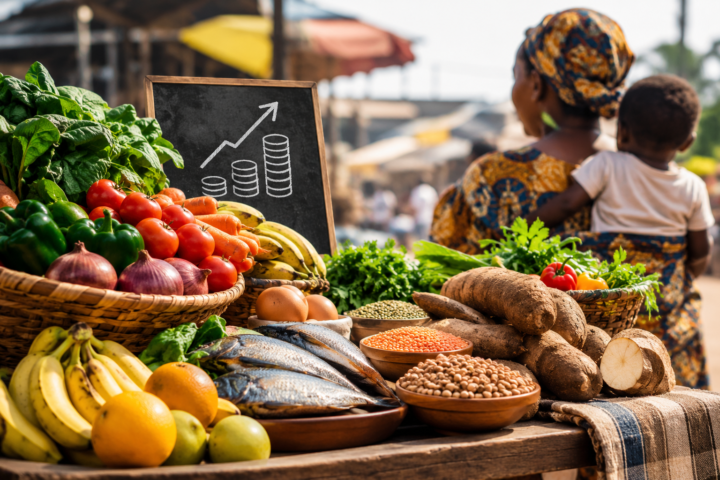
These recommendations sound straightforward—until you go to the market.
For many Nigerians, eating a healthy diet is no longer simply a question of knowing what to eat. Increasingly, it is a question of whether they can afford it.
And that raises a difficult public-health question:
Is healthy eating becoming a privilege rather than a realistic choice for everyone?
The problem is bigger than individual food choices
Nutrition conversations often focus heavily on individual behaviour. We tell people to make healthier choices, plan their meals, reduce sugary foods and eat a greater variety of fruits and vegetables.
Education matters. But education alone cannot solve a problem created partly by the price and availability of food.
Many people cannot afford a healthy diet
The State of Food Security and Nutrition in the World 2026 (SOFI 2026), published in July 2026 by FAO, IFAD, UNICEF, WFP and WHO, focuses on the cost of a healthy diet. Its main findings are:
- About 2.7 billion people worldwide, roughly one in three, could not afford a healthy diet in 2025.
- In Africa, 66.6% of the population could not afford a healthy diet in 2025, compared with 28.9% in Asia
- The global average cost of a healthy diet rose to 4.28 dollars per person per day in 2025, up from 3.44 in 2021 and 2.94 in 2017
These figures change how the problem should be framed. When a household can afford enough food to avoid hunger but cannot regularly afford vegetables, fruits, legumes and animal-source foods, the barrier is economic access, not a lack of nutrition knowledge.
Why nutritious foods cost more
SOFI measures the cost of a healthy diet as the lowest-cost combination of locally available foods that meets energy and most nutrient requirements. It draws on six food groups: starchy staples; animal-source foods; legumes, nuts and seeds; fruits; vegetables; and oils and fats. This is a cost benchmark, not a prescribed diet for any individual.
The cost is not spread evenly across food groups:
- Starchy staples provide about half of dietary calories but make up only a small share of the cost.
- Animal-source foods, fruits and vegetables together account for nearly 70% of the cost.
- In Africa, animal-source foods are the largest cost component. Fruits are comparatively inexpensive in many African markets.
This creates a trade-off for low-income households. They can buy the foods that give the most calories per naira, or the more expensive foods that supply more vitamins, minerals and protein. Calories are cheap. Nutrition is not.
Food price pressure in Nigeria
FAO analysis of food prices between 2019 and 2024 found that Nigeria was among the countries most affected by rising prices of starchy staples and cooking oils. As reported from that analysis, the price index for starchy staples reached about 500 points by July 2024, and the index for oils and fats exceeded 375 points. The overall food price index averaged about 300 over the same period.
Staples make up a large share of what lower-income households eat, so these increases leave less money for the rest of the diet. Common coping strategies include:
- buying fewer fruits and vegetables;
- eating less animal-source food;
- relying more on cheap staples;
- reducing meal frequency or portion sizes; and
- replacing nutrient-dense foods with cheaper, less nutritious alternatives.
Over time, these changes reduce dietary diversity and can worsen nutritional status.
Being fed is not the same as being nourished
A person can eat enough calories and still have a poor-quality diet. This matters in Nigeria, which faces a double burden of malnutrition [citation needed]: under-nutrition and micronutrient deficiencies exist alongside overweight, obesity and diet-related non-communicable diseases.
The cheapest food is not necessarily the most nutritious. Advice to “eat healthier” is incomplete unless it also asks which nutritious foods households can realistically afford.
Healthy eating does not require expensive foods
Healthy diets do not depend on imported or specialty products. SOFI 2026 finds that building the diet from locally available foods lowers its cost by about 34% globally and by almost 80% in Africa, compared with a standardized global food basket. Legumes, grains, roots and tubers, vegetables, fruits and fish can all form part of a nutritious diet.
The issue is therefore not whether nutritious local foods exist. It is whether households can buy them regularly at a price they can afford.
The role of the food system
The price a consumer pays reflects every stage of the food chain: production, storage, transport, processing, distribution and retail. Poor roads, weak storage and cold-chain infrastructure, post-harvest losses, and high transport and energy costs raise the price of perishable, nutrient-dense foods in particular.
SOFI 2026 concludes that lowering the cost of healthy diets requires action across the agri-food value chain, not only changes in consumer behavior. It also finds that subsidizing staple foods alone can raise the relative cost of a healthy diet, because it encourages the production of calories rather than nutrients. Redirecting public support toward fruits, vegetables, legumes and other nutrient-dense foods is more effective.
Recommended actions
- Increase the supply of nutritious foods. Direct agricultural research, seed delivery, water management and extension services toward fruits, vegetables and legumes, not only staple crops.
- Reduce post-harvest losses. Invest in storage, rural roads, transport and cold-chain infrastructure for perishable foods.
- Strengthen local food systems. Support local production, processing and markets so that nutritious, culturally appropriate foods reach consumers at lower cost.
- Make nutrition education practical. Teach households about seasonal foods, affordable local alternatives, meal planning and food preservation, so they can improve diet quality within their budgets. The aim is not to lower nutritional standards but to make good nutrition achievable.
- Treat affordability as a nutrition-policy issue. Consider the cost of healthy diets when setting policy on agriculture, trade, food prices, social protection, public procurement and health.
The role of households
Households can still improve diet quality, for example by choosing seasonal produce, legumes and other affordable local foods. But individual choice has limits. Advice to “make healthier choices” that ignores income, food prices, household size and the local food environment treats a structural problem as a personal failing. A parent who feeds a family mainly on staples is often making the best choice available under real constraints.
Conclusion
Healthy eating depends on knowledge, but also on price and availability. When nutritious food is out of reach, the costs appear later in child growth, micronutrient status, learning, productivity, obesity, hypertension, diabetes and health spending.
The central question for nutrition and health professionals should therefore be this: what would it take to make a healthy diet affordable for every Nigerian household?
References
- FAO, IFAD, UNICEF, WFP and WHO (2026). The State of Food Security and Nutrition in the World 2026: Understanding and Addressing the High Cost of a Healthy Diet. Rome. https://doi.org/10.4060/cd8306en
- UNICEF Data (2026). The State of Food Security and Nutrition in the World 2026 (report summary). https://data.unicef.org/resources/sofi-2026/
- UNICEF UK (2026). “UN report: Global hunger levels ease for third consecutive year as regional disparities persist.” https://www.unicef.org.uk/?p=573596
- People Daily (23 July 2026). “FAO report reveals 2 in 3 Africans cannot afford healthy food.” https://peopledaily.digital/news/fao-report-reveals-2-in-3-africans-cannot-afford-healthy-food
- United Nations (2026). Press briefing on SOFI 2026, transcript. https://transcripts.un.org/en/asset/k13/k130qbwn20
- FAO (21 July 2026). SOFI 2026 launch, transcript. https://www.fao.org/media/docs/aboutfaolibraries/transcripts/sofi-2026-transcript_260721.pdf
- Ecofin Agency (27 August 2025). “Staples and cooking oils drive food inflation in Nigeria.” https://www.ecofinagency.com/news-agriculture/2708-48197-staples-and-cooking-oils-drive-food-inflation-in-nigeria
- Abiola, G. H. “Navigating Food Inflation in Nigeria: An Assessment of Staples Price Volatility, Household Coping Strategies and Policy Responses.” Economic and Policy Review. https://www.ajol.info/index.php/epr/article/view/332260